
Media Blasting vs. Chemical Stripping: Best Methods for North Carolina Wood Restoration
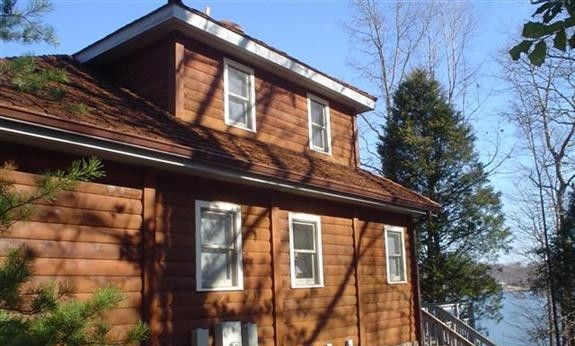
North Carolina weather is tough on log homes. Intense sun in the Sandhills, salt air on the coast, and freeze-thaw cycles in the Blue Ridge all work against clear finishes and stains. If you own a log or timber home, the big question is how to remove a failing coating so your next finish bonds and lasts. This guide compares media blasting and chemical stripping for North Carolina wood restoration, with practical steps that protect your home, landscape, and water.
For a deeper dive, explore our media blasting service to see how different dry media safely clean wood while preparing it for fresh stain.
Why Log Home Finishes Fail In North Carolina
Both acrylic and oil-based finishes eventually break down here. High humidity encourages mildew, spring pollen cakes to sticky surfaces, and strong UV can chalk or fade film-forming coatings. On the coast, salt accelerates wear. In the mountains, snow and angle of sun create uneven exposure that ages one side faster than the others. Movement in the logs from seasonal moisture swings also stresses any coating.
Watch for these common signs that a coating is failing and removal is due:
- Dark blotches or mildew shadows that return soon after cleaning
- Gloss turning flat, chalky, or patchy
- Peeling or flaking on southern or western exposures
- Water no longer beads and soaks in quickly
- Color mismatch where overhangs protect some areas but not others
Once you see these symptoms, plan a full removal rather than spot touch-ups. Removing the tired film and resetting the surface gives your next stain the right profile to bond.
Media Blasting: How Dry Media Clean And Prepare Log Surfaces
Media blasting uses controlled air pressure to propel a soft abrasive that lifts failed coatings without saturating the wood. For log homes, common media include crushed glass, corn cob, and walnut shells. Each behaves slightly differently:
Crushed glass is angular and efficient at cutting through stubborn acrylics or heavy oils. Corn cob is gentle and tends to leave a warm, even tone that many homeowners like on pine and cypress. Walnut shells fall between the two and can be tuned for delicate trim or stubborn knots. Skilled technicians adjust air pressure, nozzle distance, and flow rate to match the log species and coating type.
Beyond cleaning, blasting also sets the surface profile. A fine, uniform micro-roughness gives penetrating stains a place to key in. Think of it like preparing a seedbed. The right profile supports even color, good absorption, and strong adhesion.
Grain raise is a natural byproduct of blasting, especially on softer earlywood bands. Light buff sanding or back-brushing after blasting helps knock down whiskers and evens the look before stain. Done correctly, the result is a consistent, bright surface that is ready for finish.
One more plus for media blasting in North Carolina is minimal added moisture. Because the process is dry, the logs do not take on water, which helps speed up the schedule between cleaning and restaining during humid seasons.
Chemical Stripping: How It Removes Film-Forming And Oil Finishes
Chemical stripping relies on liquid or gel products to soften and release coatings. Formulas vary. Alkaline or solvent-rich blends typically tackle dense acrylic films. Oil-friendly strippers are designed to loosen penetrating oils and semi-transparent stains. Experienced crews select targeted products and let them dwell long enough to do the heavy lifting, then rinse or gently scrape to remove slurry and residue.
Chemical stripping can achieve excellent results on complex profiles, around window bucks, or where blasting access is limited. Gel formulas cling to vertical logs and carved details, and can be easier to control near delicate masonry. After stripping, neutralization and thorough rinsing are critical so the new stain cures as intended.
Because water is part of the rinse step, dry time becomes a factor. In humid coastal or Piedmont conditions, crews monitor ambient humidity, shade, and airflow before moving to stain. Grain raise can still happen with chemical methods, particularly where water lifts fibers. Light finish sanding or a buff pass can reset the surface.
Side-By-Side: Best-Fit Choices For North Carolina Conditions
Both methods work. The better choice depends on your coating, setting, and goals.
- Heavy acrylic film that is peeling on sun-baked walls: media blasting with crushed glass often removes it cleanly and sets a good stain profile.
- Delicate trim or carvings near stone or brick: gel chemical stripper allows controlled removal with careful masking.
- Mountain cabins with limited water access or concern for added moisture: dry media blasting minimizes wet time and helps keep the schedule moving.
- Homes with landscaping tight to the walls: chemical gels and careful hand removal can reduce drift, paired with strong containment.
- Mixed coatings from prior touch-ups: start with test patches of both methods to confirm which releases the stack-up safest.
Surface Profile, Grain Raise, And Moisture Checks Before Restaining
The most overlooked step in restoration is verifying the condition of the wood before stain. After blasting or stripping, crews assess the surface profile by touch and visual uniformity. The goal is consistent micro-texture. Sharp ridges or fuzzy fibers are addressed with a quick buff so stain lands evenly and does not flash dark in softer bands.
Moisture is the second checkpoint. Freshly rinsed walls and shaded elevations can hold moisture longer than they appear. A calibrated moisture meter helps confirm when the logs are ready. Always verify log moisture content matches your stain manufacturer’s guidelines before restaining. Readings are typically recorded by elevation and orientation so everyone on the crew knows which walls are ready first.
Finally, spot testing the chosen stain on cleaned wood tells you how it will look in your light. A small sample confirms color, absorption, and sheen before the whole home is coated.
Containment, Property Preparation, And Environmental Stewardship
Good containment keeps neighbors happy and the job site tidy. For media blasting, that means masking windows and doors, hanging poly at gable ends, and deploying drop cloths and recovery mats at the base of walls. Soft landscaping is covered or temporarily tied back. Media is vacuumed and bagged for proper disposal. For chemical stripping, taped seams, ground tarps, catch pans, and controlled rinsing prevent splash and protect soil.
Crews also think about water pathways. Gutters, downspouts, and grading can carry rinse water farther than you expect. Never allow blasting media or stripper runoff to enter streams, wells, or storm drains. Responsible contractors plan water control around slopes and hardscapes and follow product guidance for capture and disposal.
Here is what homeowners across North Carolina can do to help the site run smoothly:
- Move vehicles, grills, and furniture at least several feet from the walls the day before work begins
- Identify irrigation controls, wellheads, and septic lids so they can be protected
- Trim shrubs touching the siding to create safe access and airflow
- Secure pets and coordinate gate codes for uninterrupted work hours
- Close windows, remove interior screens near work zones, and note any prior leaks for extra attention
Schedule restoration during a dry forecast window for best results. In humid pockets of the Piedmont or near lakes, shade and morning dew can stretch dry times. Your crew will sequence walls to hit the best sun and airflow each day.
Matching The Method To Log Species, Coating, And Setting
North Carolina homes are built from many species. Southern yellow pine and white pine are common and respond well to carefully tuned corn cob or walnut blasting, which lifts coatings while keeping the surface bright. Cypress is popular near the coast for its decay resistance and can do well with either method depending on the coating history. Cedar’s natural oils mean stain choice and timing matter. Test patches tell you how the wood reacts.
Think about your setting too. Coastal cottages fight salt spray and wind-driven rain. Media blasting is attractive there because it avoids extra water, but strong containment is essential in open, breezy lots. Mountain cabins see more snow and shade; chemical gels can be handy on tight walkouts where media recovery would be difficult. Piedmont neighborhoods with close neighbors may favor the quiet, targeted nature of gels on selected elevations, combined with blasting on open sides. A blended plan is common.
When Media Blasting Shines
Media blasting is a standout when speed and dryness matter. It strips heavy films efficiently, reveals sound wood quickly, and creates a uniform surface profile in one pass. It is particularly effective on sun-scorched south and west walls and on knotty pine where films have fractured. When the plan includes returning to a penetrating stain, the micro-tooth left by crushed glass or corn cob helps even absorption and durable adhesion.
For a look at how the process works from setup through cleanup, browse our overview of log home media blasting and see why crews across the state rely on it for stubborn coatings.
When Chemical Stripping Makes More Sense
Chemical strippers are the quiet scalpel of restoration. They can be placed precisely under eaves, around stone columns, and on delicate trim where overspray is not an option. Gel products cling to vertical surfaces and let chemistry do the work while containment captures residue. After neutralization and a proper rinse, a light buff sands away any raised fibers so the new finish lays down smooth.
Gels are also useful on mixed-coating homes where layers of old oil stain were topped with a thin acrylic that never bonded well. Carefully staged dwell times let the crew peel the stack without cutting into the wood.
Our Process At Taskmasters
Every project begins with a thorough inspection of log condition, coating type, exposure, and site constraints. We often recommend small test patches of both methods on different elevations. This proves which approach releases the film safest and sets the most uniform profile. We then present a written plan with containment layout, media or product selection, and a weather-aware schedule.
On site, the crew documents moisture readings and surface prep steps before staining. Touch-up sanding evens out grain raise. Windows, doors, and fixtures are unmasked only after cleanup is complete. Your home and landscaping are treated like our own throughout the process.
For a quick overview of our capabilities and service area, start at media blasting wood restoration NC and learn how Taskmasters restores homes from the coast to the mountains.
Timeline, Weather, And What To Expect
Project length varies by home size, elevation count, log species, and weather. Coastal breeze can speed drying, while wooded lake lots may require more time. What matters most is working in the right sequence so cleaned walls do not sit long before stain. We build schedules around shade, airflow, and your everyday routine so the process is smooth from start to finish.
Communication is part of the craft. You will know when containment goes up, when blasting or stripping happens, and when neutralization, buffing, and staining are set. If storms threaten, work pauses to protect your home and to ensure the next coat bonds properly. We verify readiness at each step rather than rushing the timeline.
Environmental Considerations You Can Count On
Stewardship is central to restoration. We protect plantings, isolate wellheads, and follow product guidance for capture and disposal so residues do not travel. Coastal zones and lake communities often require extra attention to wind and runoff. Our containment plans reflect those realities, and our cleanup includes a final walk to collect any stray media or debris so paths, decks, and beds are clean.
Ready To Plan Your Project?
You can learn more about methods and media choices by reviewing our detailed approach to the log home media blasting process. A short phone call helps us understand your home’s coating history and exposure so we can propose the right path.
Ready to restore your log home with trusted media blasting wood restoration in NC? Call Taskmasters today for a professional evaluation.
Questions or scheduling requests? Call us at 252-266-9457, and our team will help you choose the best window for your home and climate.